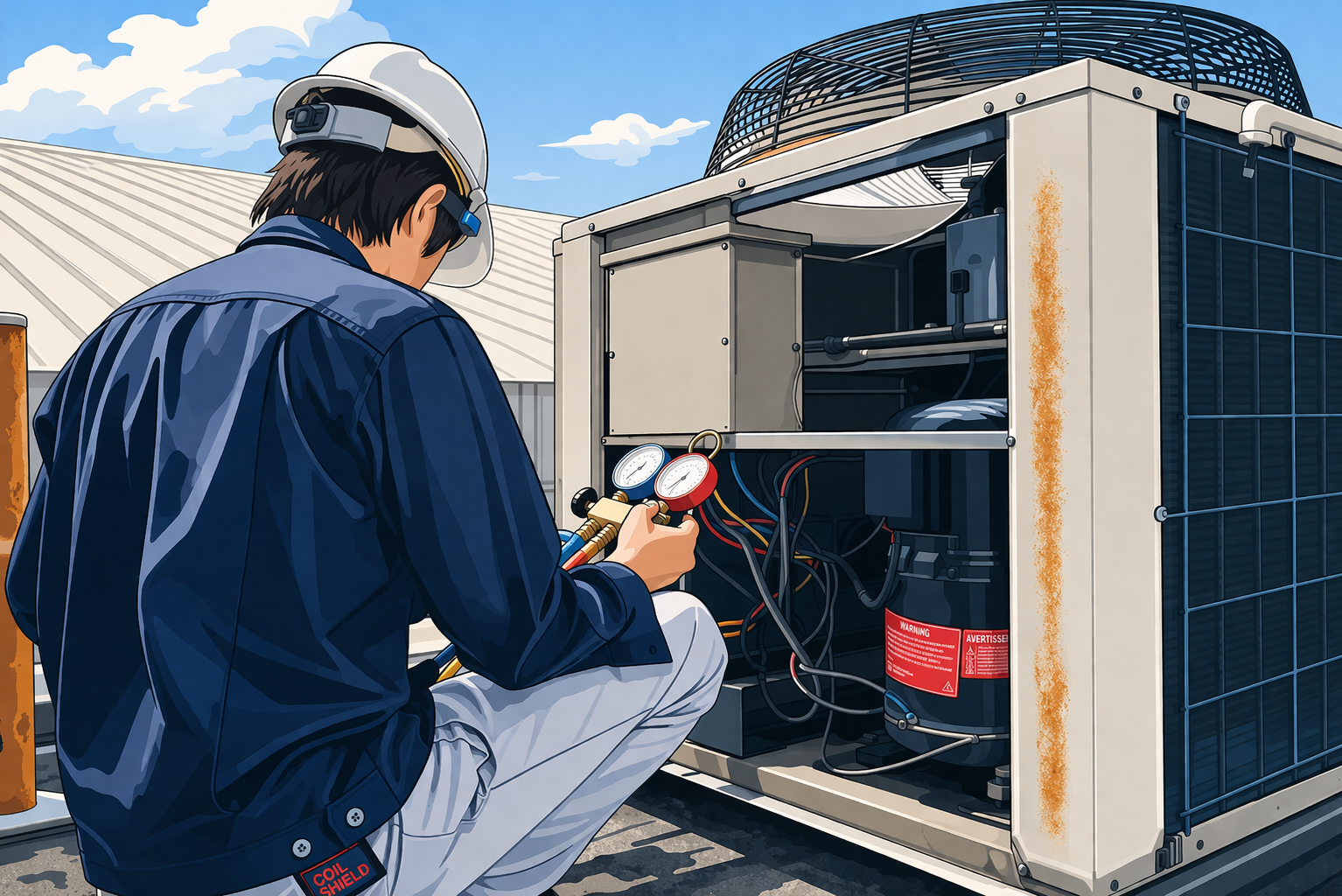
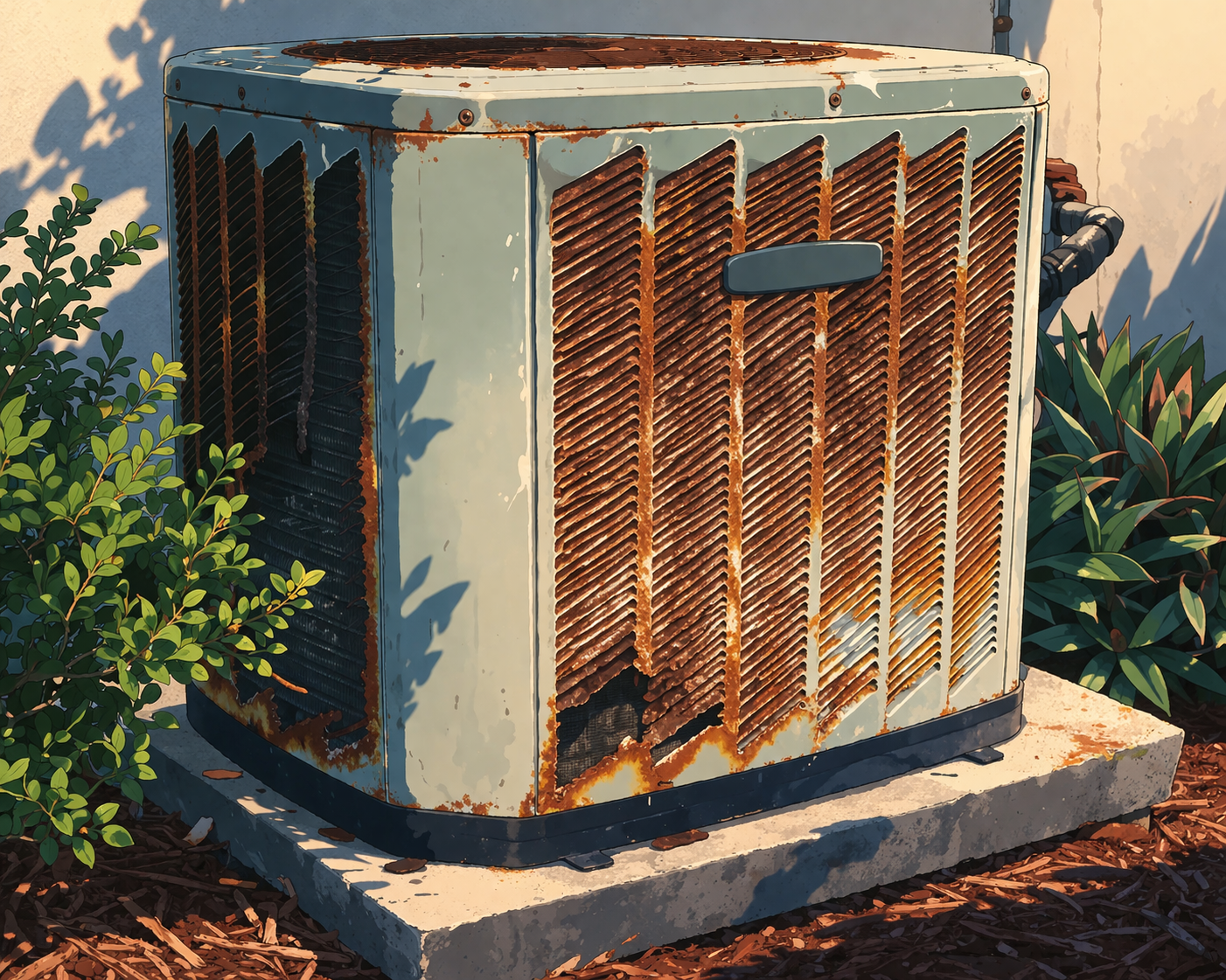
The most economical way to protect your HVAC coil. Compatible with every major residential brand including Carrier, Lennox, Trane, Goodman, Daikin, and Mitsubishi. Clamps to the suction line in about 30 minutes with no brazing, no refrigerant handling, and no electrical work.

Passive protection

Sacrificial Anode Protection System

How the passive system behaves in the real world—scroll through power-free operation, self-regulation, economics, galvanic control, commissioning, and annual service.

This demo uses modern scroll-driven CSS. For the full effect, view it in a current Chromium browser.

Scroll to peel back each stage.

00%
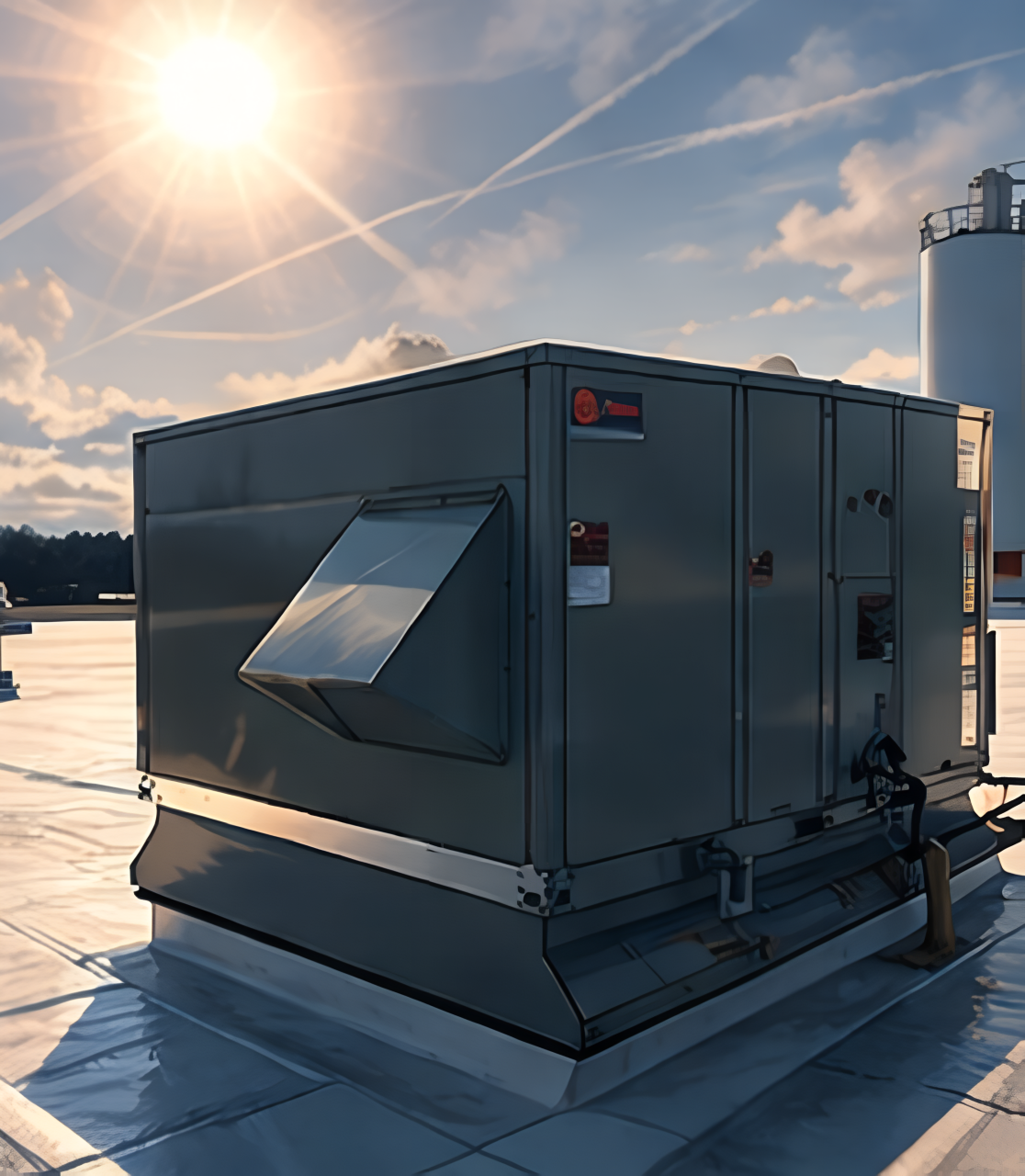
Sacrificial anode clamped to the suction line on a residential system
Passive

No Power Required

The magnesium anode and coil form a galvanic cell when condensate is present. Magnesium's electrochemical potential of approximately -1.6 V relative to copper drives protective current through the system, making the coil the cathode. The anode corrodes. The coil does not. No electrical connection, no ongoing power cost.
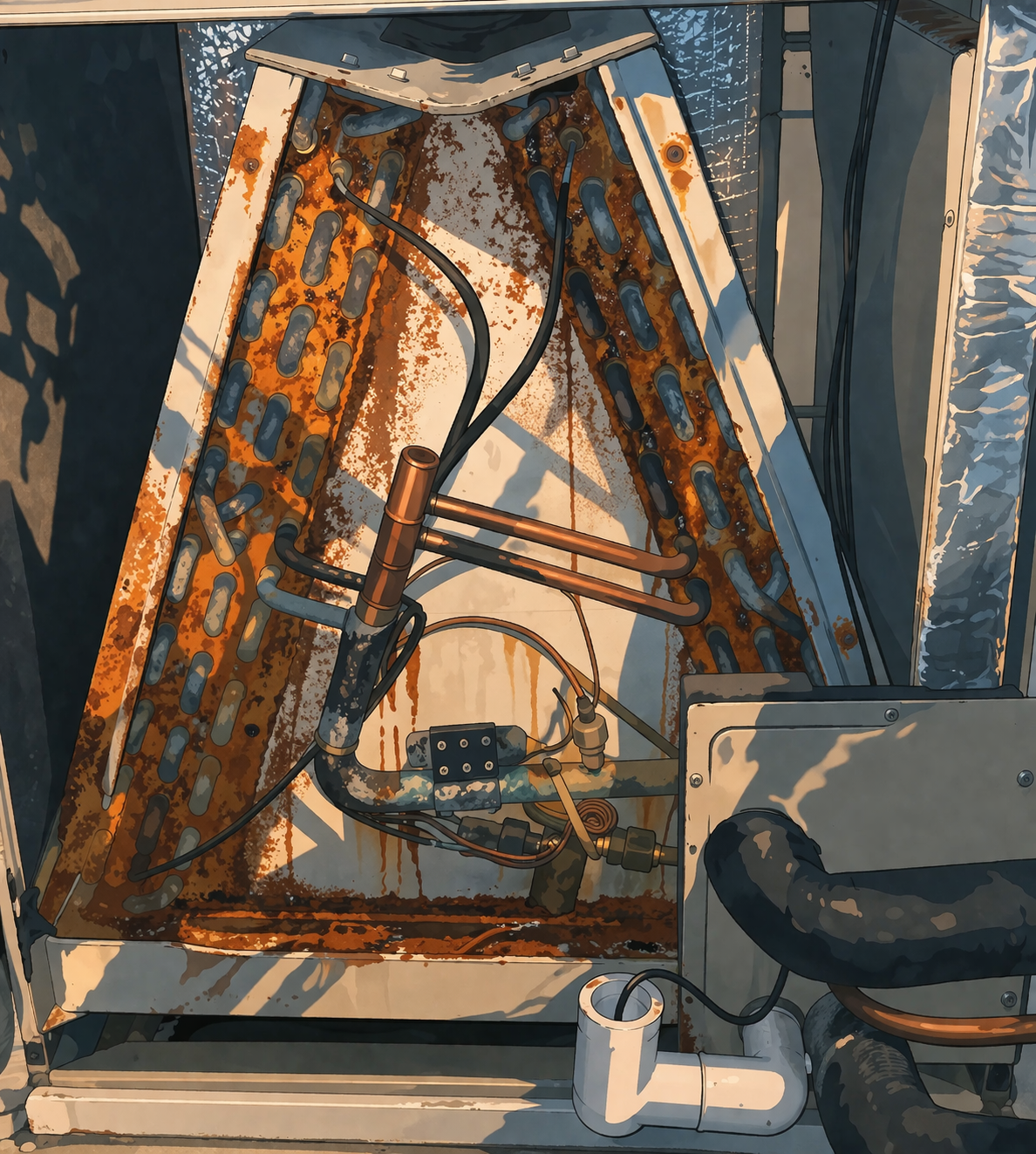
Close-up of an HVAC coil operating in a wet, high-condensate environment
Adaptive

Self-Regulating

Protection is most active when moisture is present, which is when corrosion risk is highest. When the coil is dry, protection levels are minimal because corrosion cannot proceed without an electrolyte. The system responds to the actual corrosion environment without manual adjustment.

Economic context comparing routine anode cost with coil replacement exposure
Economics

The Annual Anode Cost vs. a Coil Replacement

The anode is replaced yearly at your annual service visit. At $50 per anode, that is $50 per year for continuous coil protection. A single avoided coil replacement, which costs $850 to $2,400 out of pocket even with warranty coverage, pays for 17 to 48 years of anode replacements. The math is straightforward.

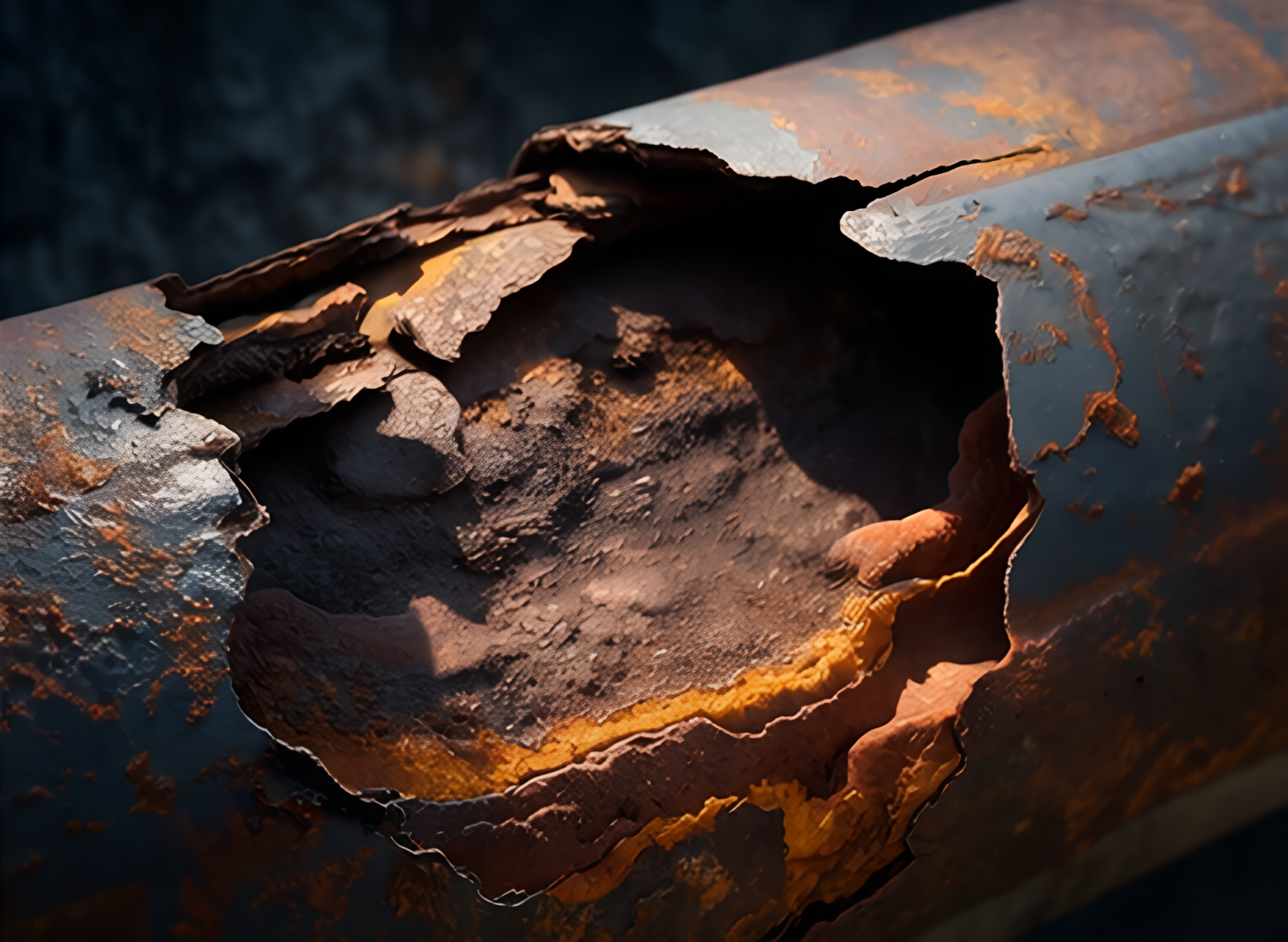
Illustration of galvanic corrosion risk on mixed-metal HVAC coil surfaces
Protection

Prevents Galvanic Corrosion and Reduces Other Electrochemical Attack

Cathodic protection directly prevents galvanic corrosion and significantly reduces pitting and crevice corrosion by shifting the coil's electrochemical potential into the protected range. Magnesium's approximately -1.6 V driving voltage relative to copper provides sufficient potential difference to maintain protection across the coil surface.

New construction and finishing materials context for early coil exposure
From commissioning

Works From Day One

Install it during commissioning of a new system and it protects against formicary corrosion from VOC off-gassing during the critical first years. Install it on an existing system and it stops ongoing galvanic corrosion from advancing further.

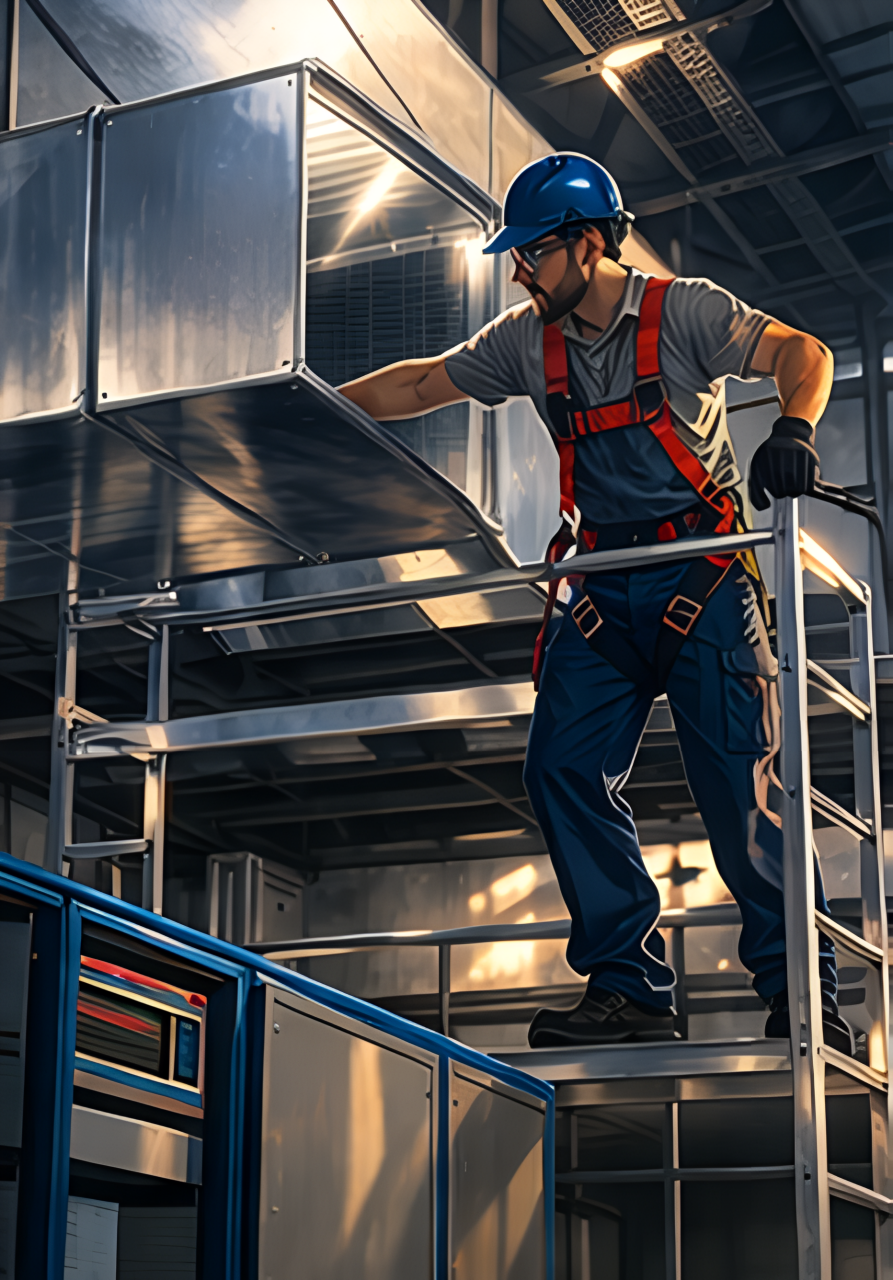
HVAC technician performing a routine maintenance visit
Service visit

Simple Annual Replacement

The anode is designed to be consumed over time. At each annual service visit, your technician unclamps the consumed anode and clamps a new one in place. No system modifications required. Takes about 15 minutes.

Use the stage markers to jump directly to any layer.

Why Choose Sacrificial Anode Protection

The most economical and effective way to protect HVAC coils from corrosion. For homeowners who do not want to think about corrosion, the sacrificial anode system provides continuous protection with one simple task: swap the anode at your annual service visit.

Who Needs CoilShield Most

Everyone with an air conditioner benefits from protection. Those in challenging environments need it urgently:

Prevent Costly HVAC Coil Failures

HVAC coil failures cost property owners $850 to $2,400 in out-of-pocket expenses even with warranty coverage, plus one to three weeks without cooling during peak season. CoilShield's cathodic protection prevents these failures and extends coil life by 10 or more years. This is not just maintenance. It is protection that pays for itself.

Key Insights

Heritage

Two Centuries of Proven Electrochemistry

In 1824, Sir Humphry Davy solved copper ship hull corrosion for the Royal Navy. Two hundred years later, this same principle protects your HVAC coils.

1824

Sir Humphry Davy demonstrates cathodic protection for the Royal Navy. Iron corrodes instead of copper hulls.

1833

Michael Faraday establishes the electrochemical principles still used in every cathodic protection system worldwide.

1928

First cathodic protection systems installed on U.S. gas pipelines.

1988

Legally mandated for underground fuel storage tanks and major oil and gas pipelines under EPA regulations.

Today

CoilShield adapts proven cathodic protection for HVAC coil corrosion prevention worldwide.

Prevention, not repair

Ready to protect your HVAC coil before it fails?

CoilShield brings proven cathodic protection to residential, coastal, agricultural, and commercial systems. Tell us about your environment and we will point you to the right protection strategy.