Resource guide
Resource library
Explore the full resource set in a single FLIP-powered workspace. Click a tile to expand the article, then close it back into the grid when you are done.
Resource guide
Resource guide

Resource guide
Resource guide
Resource guide
Resource guide
Resource guide

Resource guide
Resource guide
Resource guide
Resource guide
Resource guide
If you live within 15 miles of salt water, your HVAC system is fighting a corrosion battle from the day it is installed. Salt air carries microscopic chloride particles that deposit on every metal surface they touch, including the evaporator coil inside your air handler.
The closer you are to the water, the more aggressive it gets. A beach house a block from the ocean faces dramatically worse conditions than a home 10 miles inland. But even 10 miles away, chloride levels are elevated enough that HVAC manufacturers specifically address it in their warranty exclusions.
This is not speculation. Every major HVAC manufacturer has language in their warranty or installation documentation addressing coastal environments, and none of it is favorable to the homeowner. All quotes below are sourced directly from manufacturer installation manuals and warranty documents, linked to their original PDFs.
Mitsubishi Electric warranty states: [direct quote from documentation]
Trane/American Standard requires: [direct quote about Sea Coast Kit requirement]
Lennox Installation Manual warns: [direct quote from documentation]
Fujitsu explicitly excludes: [direct quote from documentation]
Notice what Trane requires: the only way to keep your warranty valid in a coastal environment is to pay extra for a Sea Coast Kit at the time of installation. If your unit was installed without one, as most are, you may have no warranty coverage for coil failure. Preventing the failure means you never have to find out.
Chloride ions are among the most aggressive corrosion accelerants in materials science.
Aluminum naturally forms a thin oxide layer that provides some baseline resistance to corrosion. Chloride ions attack and break down this passive layer, exposing bare aluminum to ongoing oxidation. Once compromised, corrosion accelerates rapidly.
Your evaporator coil already has a built-in corrosion problem: copper connections meeting aluminum tubing in the presence of condensate. In clean air, that condensate is a weak electrolyte. Salt water conducts electricity far better than pure condensate. Higher electrolyte conductivity means higher galvanic current. Higher current means faster corrosion. A coil that might last 15 years inland can fail in 5 years near the coast.
Salt deposits build up on coil surfaces during dry periods, then dissolve when the system runs and condensate forms. This cycling creates localized zones of extremely high chloride concentration. You get pinhole leaks in locations that are nearly impossible to repair without full coil replacement.
Your outdoor condenser is exposed to salt air 24 hours a day, every day. Even when the system is not running, salt is depositing on fins and surfaces. Coastal condensers routinely fail years before their inland counterparts.
CoilShield uses cathodic protection to prevent the electrochemical corrosion that salt air accelerates. By shifting the coil's electrochemical potential into the protected range, the galvanic corrosion that salt-enhanced condensate drives is suppressed.
The CoilShield Residential Anode ($50) or Minisplit Anode ($40) installs during a routine service visit and is replaced annually as it is consumed protecting the coil. No power required, no system modifications. For homes within several miles of the water, this is a straightforward, cost-effective choice.
For oceanfront homes, elevated structures with no wind shelter, or buildings within a block or two of the water, the CoilShield ICCP Device ($500) provides professional-grade protection with real-time monitoring and adjustable current control. ICCP is the right choice when conditions are severe enough that you want precise, verifiable control over protection levels year-round.
The math is straightforward: a CoilShield system costs less than one service call, and far less than one coil replacement. In a coastal environment where coils fail early and warranties frequently exclude the damage, preventing even a single failure more than pays for the protection. Your coil is under attack from the day it is installed. Protect it before the failure happens.
Not sure which system fits your coastal exposure level? Tell us your distance from the water and we will recommend the right protection.
If you operate HVAC systems in a livestock facility, poultry house, hog confinement barn, dairy operation, or fertilizer storage building, you already know that equipment does not last as long as the specs say it should. The combination of ammonia vapor, hydrogen sulfide, moisture, and organic dust creates one of the most corrosive indoor environments that HVAC equipment faces.
Manufacturers know it too. That is why they have written agricultural environments out of their warranties entirely.
Lennox explicitly excludes: [direct quote citing urine and fertilizers from documentation]
Carrier/Bryant excludes: [direct quote from documentation]
Rheem/Ruud excludes: [direct quote from documentation]
If your HVAC system services a barn, processing facility, or feed storage building, you are operating outside warranty coverage whether you know it or not.
Ammonia is produced by the decomposition of animal waste. In concentrated livestock operations, poultry houses, hog confinement, dairy barns, ammonia vapor is present at significant levels even with ventilation.
Ammonia is highly alkaline. Aluminum evaporator coils are amphoteric, meaning they are attacked by both acids and bases. Ammonia sits firmly on the alkaline side, directly attacking aluminum. The Daikin/Goodman/Amana installation manual warns that even a one-time application of alkaline chemicals can cause premature aluminum evaporator coil failure. In a livestock facility, that is not a one-time event. It is continuous exposure every hour the system runs.
Decomposing organic matter, manure, silage, waste feed, produces hydrogen sulfide. Even at low concentrations, H2S attacks copper aggressively, forming copper sulfide on tube surfaces. For coils with copper connections, this is a direct attack on refrigerant line components that can create pinhole leaks without warning.
Feed dust, dander, and bedding particles carry moisture, ammonia, and organic acids. When they deposit on coil surfaces and get wet with condensate, they create a concentrated corrosive environment at the exact locations where the metal is most vulnerable: copper-to-aluminum joints, fin-tube interfaces, and anywhere moisture accumulates.
Livestock generate heat and moisture. Agricultural HVAC systems typically run at high duty cycles to maintain animal comfort and health. More runtime means more condensate, more electrolyte, and more continuous electrochemical corrosion at every copper-to-aluminum joint in the evaporator coil.
CoilShield uses cathodic protection to address the electrochemical corrosion that agricultural environments accelerate. By shifting the coil's potential into the protected range, the galvanic reactions that ammonia-contaminated condensate drives are suppressed.
The CoilShield ICCP Device ($500) is the right choice for agricultural environments. Aggressive corrosion conditions benefit from active, adjustable protection that can be tuned to match specific exposure levels. Real-time monitoring confirms protection is working. Current control allows adjustment as conditions change seasonally or as operations expand.
For offices, break rooms, or other areas within an agricultural property that are not directly in the corrosive vapor zone, the CoilShield Residential Anode ($50) or Commercial Anode ($60) provides economical protection against the elevated ambient corrosion that exists even in peripheral areas of agricultural operations.
In agricultural operations, preventive maintenance is not a philosophy. It is how you stay in business. The cost of protecting HVAC equipment against corrosion is a predictable, manageable line item. The cost of emergency HVAC replacement during summer, with production losses, animal welfare concerns, and potential regulatory implications, is not.
CoilShield does not replace or extend manufacturer warranties. The focus is prevention: keeping your equipment running, season after season, in conditions that fall outside standard warranty coverage.
Have a livestock or agricultural facility? Tell us about your operation and we will match you to the right protection level.
Residents of Houston, Miami, New Orleans, Tampa, Orlando, Savannah, and Charleston already understand humidity on a visceral level. What most do not realize is what that humidity is doing to their HVAC coil every single day the system runs.
Corrosion requires an electrolyte, a liquid that conducts electricity between dissimilar metals. Your evaporator coil produces that electrolyte naturally: condensate forms every time your system runs, coating the coil surface with moisture that enables galvanic corrosion between copper connections and aluminum tubing.
In a dry climate, this happens during cooling season. In a humid climate, it happens nearly continuously, and the volume of condensate produced is dramatically higher.
A coil in Miami faces roughly five times the annual corrosion exposure of a comparable coil in Minneapolis. The system runs more hours, produces more condensate per hour, and has coil surfaces that stay wet longer after shutdown because ambient humidity slows evaporation. The cumulative exposure difference over a 10-year period is not marginal. It is the difference between a coil that reaches its rated service life and one that fails at the five-year mark.
In humid climates, the air your system processes contains far more moisture per cubic foot than in dry climates. A system in Houston can produce several gallons of condensate per hour during peak summer. All of it flows across coil surfaces and enables galvanic corrosion at every copper-to-aluminum contact point.
In dry climates, coil surfaces dry relatively quickly when the system cycles off. In humid climates, ambient moisture slows evaporation. The galvanic cell between copper and aluminum stays active longer. More wet time per cycle, multiplied across thousands of cycles per year, adds up.
Warm, wet coil surfaces in humid climates are ideal for mold and bacterial growth. Biological films hold moisture against the metal and produce organic acids, including formic acid and acetic acid, that drive formicary corrosion in copper tubing. This is a corrosion mechanism that dry-climate systems simply do not face at the same rate.
In humid climates, even the off-season stays damp. Spring and fall in Florida or Louisiana still have significant humidity. Equipment that dries out completely during a Midwest winter stays damp year-round in the Gulf South. There is no seasonal rest period.
CoilShield's cathodic protection addresses corrosion by shifting your evaporator coil's electrochemical potential into the protected range. Whether the condensate on your coil contains dissolved carbon dioxide, VOC-derived acids, or biological metabolites, cathodic protection suppresses the electrochemical reaction that turns those compounds into corrosion current. Protection scales with the moisture present. In humid climates where coils produce more condensate and stay wet longer, the protection responds to the higher exposure level automatically.
The CoilShield Residential Anode ($50) or Minisplit Anode ($40), installed during a routine service visit and replaced annually, is the right solution for most humid-climate homeowners. No power, no monitoring equipment. Continuous protection against the accelerated corrosion that high condensate volumes drive.
Commercial buildings in humid climates with larger systems benefit from the ICCP Device ($500) for critical equipment, or the Commercial Anode ($60) for less critical applications. The ICCP's real-time monitoring is valuable for commercial facilities where equipment downtime has direct operational consequences.
You cannot change your climate. You can change what it does to your coil. CoilShield's cathodic protection addresses the corrosion mechanism directly. The same proven electrochemical science that protects ships and pipelines, applied to the coil keeping your family comfortable through a Louisiana summer.
Live in a high-humidity region and want a specific recommendation? Contact us with your location and we will suggest the right system.
HVAC coils in industrial settings face chemical exposures that simply do not exist in residential or standard commercial applications. Manufacturing process vapors, cleaning chemical off-gases, solvent fumes, acid mists, and contaminated particulates all become part of the air your evaporator coil is condensing, day in, day out, year after year.
Manufacturers know their equipment will not survive this. Every major HVAC brand excludes industrial and corrosive environments from warranty coverage. If your coil fails due to chemical exposure, you are responsible for the full replacement cost.
Plastics manufacturing releases volatile organic compounds and acid gases. Metalworking operations create metal dust and cutting fluid mists. Food processing generates steam, organic acids, and cleaning chemical residues. The common thread: the air in manufacturing facilities contains chemical compounds that condense on cold coil surfaces and create corrosive conditions. These compounds do not need to be at hazardous concentrations to damage HVAC equipment. They just need to be present consistently.
Water treatment facilities use chlorine, chloramines, hydrogen sulfide scrubbing systems, and various chemical treatment processes. The air in these facilities contains chlorine vapor directly attacking aluminum and copper, H2S attacking copper connections, and elevated humidity from open water surfaces. HVAC equipment in water treatment plants faces a combination of corrosion threats similar to industrial facilities and coastal environments simultaneously.
Printing facilities use solvents, inks, and coatings that off-gas volatile organic compounds at concentrations many times higher than what new building materials produce. Spray coating and painting operations create fine aerosols of solvents and resins containing formic acid and acetic acid precursors, the same compounds that drive formicary corrosion in new construction but at dramatically higher concentrations.
Electroplating, anodizing, etching, and passivating operations use acid and alkali baths that generate vapor. Even with local exhaust ventilation, facility air carries acid mists and alkali vapors that condense on HVAC coils. Plating shop HVAC equipment often has among the shortest service lives of any industrial application.
Wastewater environments combine hydrogen sulfide from anaerobic bacterial activity with high humidity and elevated temperatures. H2S is notoriously aggressive toward copper, forming black copper sulfide that compromises refrigerant line integrity. Wastewater facilities consistently produce some of the most challenging corrosion conditions for HVAC equipment.
CoilShield uses cathodic protection to address the electrochemical corrosion that industrial chemical exposure drives. By shifting the coil's potential into the protected range, the galvanic reactions that chemically contaminated condensate enables are suppressed.
The CoilShield ICCP Device ($500) is the right solution for industrial environments. Active, adjustable protection is critical in settings where corrosion conditions vary with production schedules, seasonal chemical use, or facility changes. Real-time monitoring confirms protection levels are maintained. Current adjustment ensures protection keeps pace with changing conditions.
For offices, conference rooms, or other spaces within industrial facilities where chemical vapor exposure is lower than the production floor, the CoilShield Commercial Anode ($60) provides cost-effective protection against elevated ambient corrosion conditions.
Major HVAC manufacturers exclude industrial and corrosive environments from warranty coverage. Their warranty language is clear: chemical exposure, corrosive atmospheres, and industrial environments are outside covered use cases.
CoilShield does not change warranty terms. What cathodic protection does is address the underlying failure mechanism directly, keeping equipment running in conditions that fall outside standard coverage, without the downtime, replacement costs, and operational disruption that coil failure causes. In industrial operations, equipment reliability is not optional. Protecting your HVAC coils is a straightforward way to take one significant failure mode off the table permanently.
Have a facility with specific chemical exposures? We can help you choose the right system.
The case for protecting your HVAC coil does not rest on CoilShield's claims. It rests on the words of the manufacturers who built the equipment. Every major HVAC OEM either explicitly warns about corrosion risks in their installation manuals or excludes corrosive environments from warranty coverage. In many cases, they do both. All quotes on this page link directly to the original manufacturer PDF documentation so you can read the source yourself.
Carrier and Bryant explicitly warn installers about the galvanic corrosion risk when copper and aluminum come into contact. This is a direct acknowledgment in the installation manual that the electrochemical reaction between dissimilar metals can destroy coils.
Lennox acknowledges that aluminum coils are vulnerable to pH extremes and requires frequent cleaning in coastal areas. This warning recognizes that salt buildup accelerates corrosion and that aluminum's narrow safe pH window makes it vulnerable to common cleaning products.
Daikin, Goodman, and Amana explicitly state that a single application of the wrong cleaning product can destroy an aluminum coil. This acknowledges that aluminum is amphoteric, attacked by both acids and bases, and that the safe pH window is narrow.
While manufacturers warn about corrosion risks, they simultaneously exclude corrosive environments from warranty coverage. They acknowledge the problem but will not cover failures caused by it.
If you live in any of these environments, your warranty may provide zero protection for coil failures: within 15 miles of salt water, buildings with indoor pools or spa facilities, agricultural properties with livestock or fertilizer exposure, industrial or chemical environments, and in some cases new construction with high VOC off-gassing.
Manufacturers are saying: we know corrosion is a problem, we warned you about it, and if it happens, it is not covered.
CoilShield provides protection in environments where manufacturers exclude coverage. Our cathodic protection systems address the electrochemical corrosion mechanisms by the same proven principles used to protect the gas pipeline running under your street.
Want to read the original manufacturer documentation yourself? We can provide direct links to source PDFs.
Formicary corrosion is particularly insidious. Organic acids such as formic and acetic acid produced from VOC oxidation products create branching tunnels inside copper tubes that progress from the inner surface outward. Unlike galvanic corrosion, which attacks from the outside, formicary corrosion attacks from within. The tunnels branch through the metal, creating a network of microscopic passages that eventually leak. The name comes from the Latin word for ant.
You cannot see it on the surface. The coil looks fine until it fails.
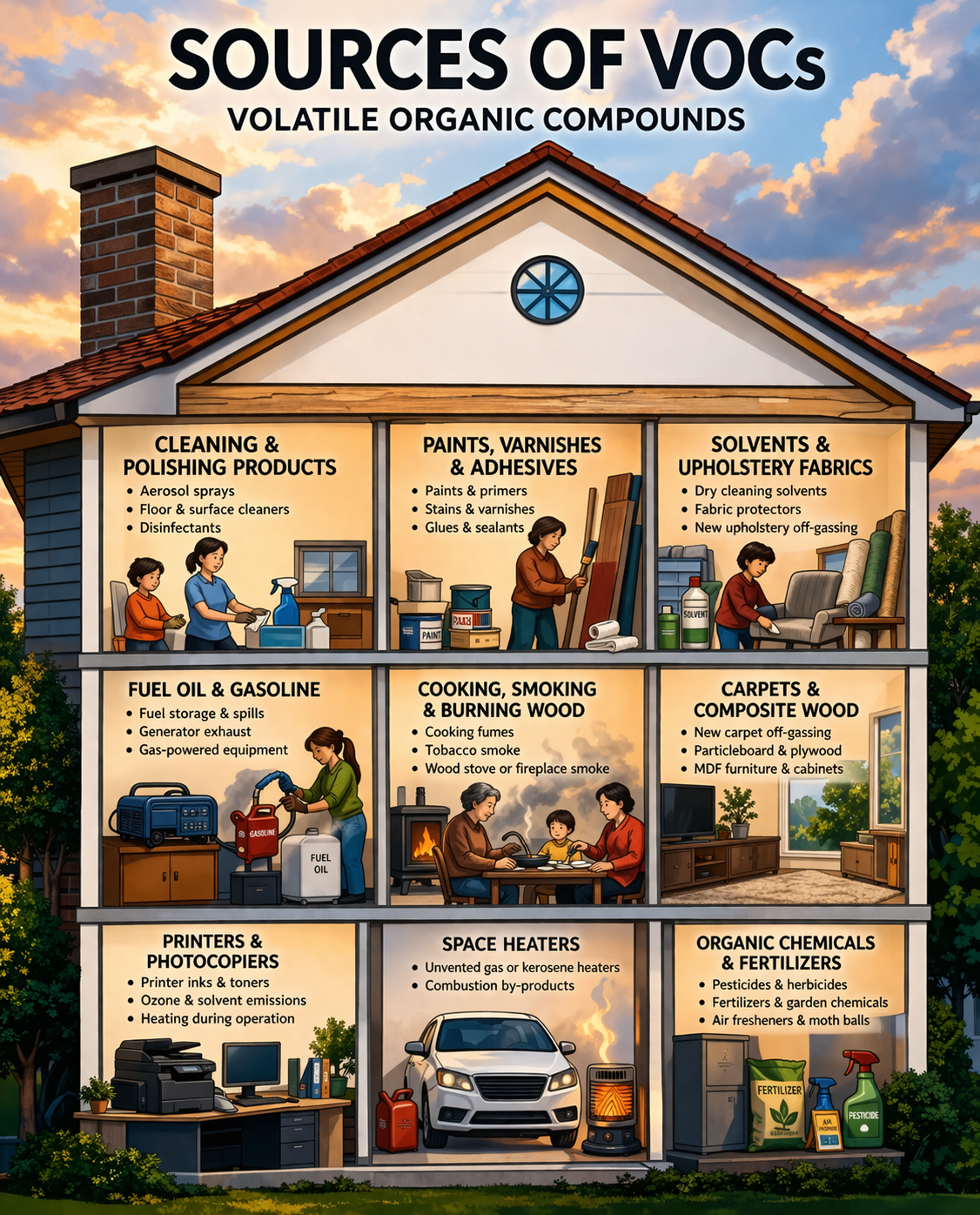
New homes are particularly vulnerable because VOC off-gassing is highest in the first few years. The combination of paint, adhesives, carpet, plywood, and construction materials generates high concentrations of organic compounds. These circulate through the home's air, condense on the cold evaporator coil, and create the acidic environment that drives formicary corrosion.
CoilShield's cathodic protection addresses formicary corrosion by shifting the copper tube's electrochemical potential into the protected range. When adequate cathodic protection is maintained, the electrochemical conditions required for corrosion are suppressed at the protected surfaces, whether the threat is galvanic corrosion, acidic attack, or formicary corrosion from VOC-derived organic acids.
Installing CoilShield when a new construction HVAC system is commissioned protects your coil through the highest-risk period, the first three to five years when VOC off-gassing is at its peak. Five years later, the coil is intact and the protection is still active.
Moving into a new home or overseeing new construction? Let us set up protection before the corrosion starts.
When people evaluate CoilShield, they often compare the price of the product against what warranty covers. That comparison is missing most of the math.
Warranty covers the part. It does not cover labor. It does not cover refrigerant. It does not cover the time you spend without air conditioning. It does not cover the second or third replacement when the next coil fails in the same environment. And in certain environments including coastal, pool, agricultural, and new construction with spray foam, it may not cover anything at all.
Here is what the full financial picture actually looks like over a 15-year system life.
When an evaporator coil fails under warranty, manufacturers cover the replacement coil. That sounds good until you see what you are still paying:
Labor to diagnose: $150 to $300. Labor to remove and install the new coil: $400 to $1,200. Refrigerant recovery and recharge: $200 to $600. Emergency or after-hours premiums: $100 to $300. Total out of pocket even with full warranty coverage: $850 to $2,400.
Consider two homeowners with identical HVAC systems in a humid climate. Homeowner A installs CoilShield. Homeowner B does not.
[Financial comparison table to be inserted here]
That is on the conservative end. In coastal, agricultural, or pool environments where warranty may not cover either failure, the difference is larger. In humid climates where runtime is high and corrosion is accelerated, the timeline to first failure may be shorter, pulling the financial benefit forward.
A warranty coil replacement in July does not happen in a day. You call Monday, the technician diagnoses Thursday, the part ships and arrives three to seven days later, installation is scheduled a few days after that. Two weeks without air conditioning in a humid summer affects sleep quality, work productivity, and family wellbeing in ways that compound daily.
Some families end up in hotel rooms to escape the heat. A weekend in a hotel during an HVAC crisis adds $200 to $600 to the total cost. Portable air conditioners purchased in desperation add $200 to $500 more, and they solve one room, not a house.
Households with elderly members, infants, or people with medical conditions face genuine health risk during extended heat exposure. Heat illness kills. The value of knowing your coil is protected does not appear in any cost table.
The right mental model for CoilShield is maintenance, not insurance. You change your furnace filter to prevent blower motor failures. You service your HVAC every year to catch small problems before they become large ones. You protect your coil with cathodic protection to prevent the single most expensive failure your HVAC system can experience.
Corrosion happens every time your system runs and condensate forms on the coil. It is not a question of whether to address it. It is a question of whether to address it now for a small, planned cost, or later for a large, unplanned one. The math favors prevention by a wide margin.
Want to run the numbers for your specific environment? Contact us and we will walk through the financial case for your property.
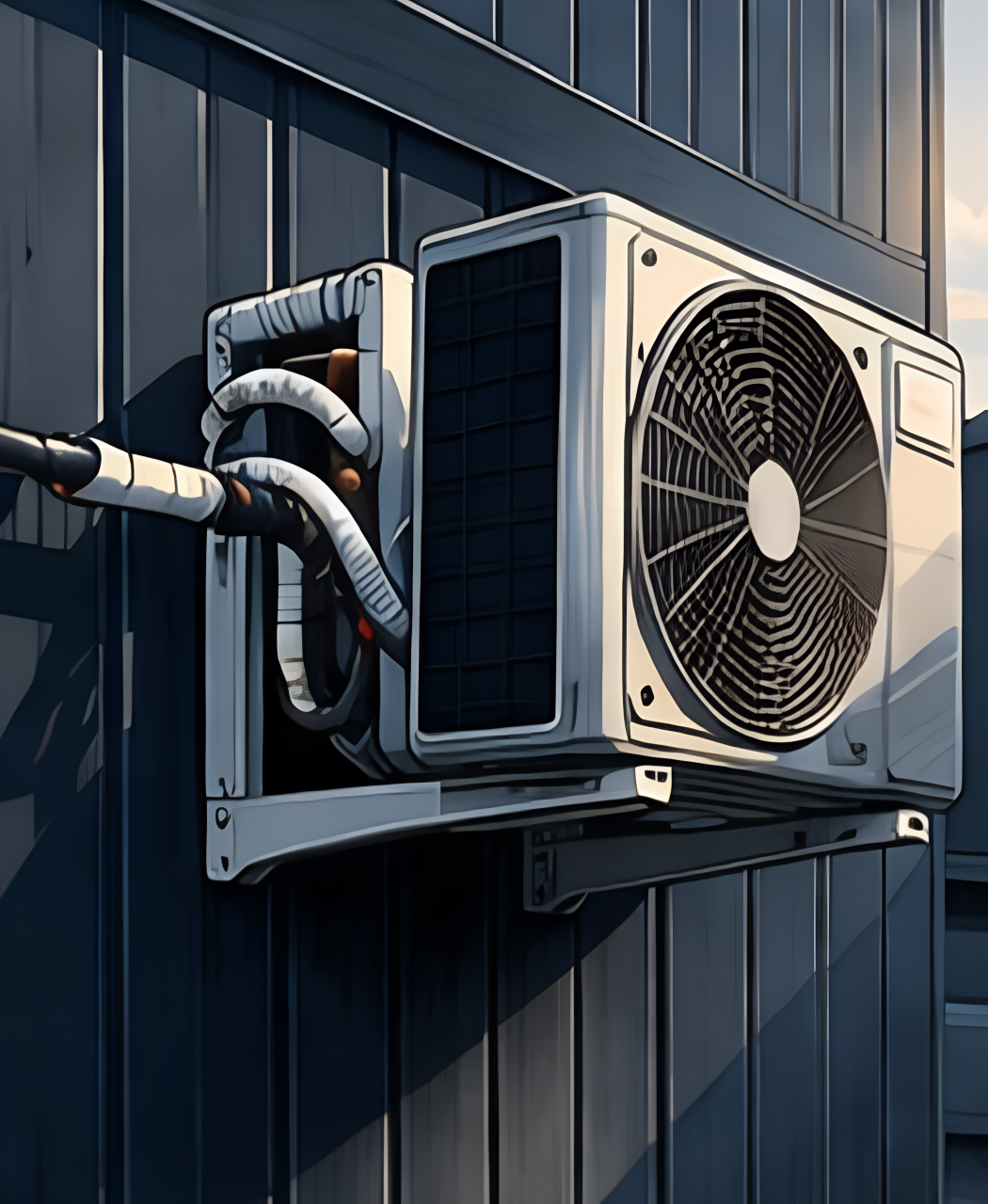
CoilShield installs on the suction line, the large copper pipe that carries cold refrigerant vapor from your evaporator coil back to the outdoor unit. This line is accessible without disassembling the air handler, is in direct metallic contact with the coil, and is cold and wet during operation, covered in condensation every time the system runs. Installation is straightforward for any qualified HVAC technician: no system modifications, no refrigerant handling, no electrical work for sacrificial systems.
The magnesium anode clamps directly to the suction line. When the system runs, condensation forms on both the anode and the coil. The condensate acts as an electrolyte, completing the galvanic circuit between the magnesium anode and the coil metals. Magnesium's high driving voltage forces it to become the active electrode, and the coil becomes the cathode. Corrosion attacks the magnesium. The coil is protected.
No power required. The anode is replaced annually at the regular service visit as it is consumed protecting the coil.
For larger systems or more aggressive environments, the ICCP system provides precise, adjustable protection. A power supply controller drives current through an inert titanium anode attached to the suction line. A reference electrode monitors the electrochemical potential of the coil in real time, providing feedback that the controller uses to maintain optimal protection levels. Protection adjusts automatically as environmental conditions change.
CoilShield's protection scales with the moisture present on the coil surface. Protection levels are highest when condensate is present, which is when electrochemical corrosion risk is highest. When the coil is dry, minimal to no electrolyte is present and corrosion cannot proceed. The system adjusts automatically with no manual intervention required.
Works with all coil types and HVAC systems. Compatible with aluminum, copper, and mixed-metal coils. No system modifications required. Compatible with every major residential and commercial HVAC brand.
Questions about the technical details? Contact us and we will walk you through it.
It is 3 PM on an August afternoon in Houston. The outdoor temperature reads 98 degrees. The humidity is 78 percent. Inside your home, the thermostat says 82 degrees and climbing.
Your air conditioner died this morning.
If you have never experienced this, here is what 82 degrees at 70 percent humidity feels like: the air is thick and heavy, like trying to breathe through a wet blanket. Sweat beads on your skin and does not evaporate because the air is already saturated. Your clothes stick to you. Sleep becomes impossible. Concentration becomes impossible. Your body is working overtime just to maintain its core temperature, and it is losing the battle.
For elderly residents, infants, or anyone with respiratory conditions, extended heat exposure during an HVAC failure is a genuine health risk, not just discomfort. Heat illness kills more Americans annually than hurricanes, tornadoes, and floods combined. It does not require extreme temperatures. It requires sustained heat, inadequate cooling, and time.
Your HVAC system is the primary system keeping your home livable through summer. At the center of that system, doing the actual work of pulling heat and moisture from your air, is the evaporator coil. When that coil fails, the entire system stops cooling.
Here is what a covered warranty claim actually looks like in July: You call Monday. The technician diagnoses Thursday. Coil ordered Friday. Parts arrive the following Wednesday. Installation scheduled for Friday. You have been without air conditioning for 11 days, and that is if everything goes smoothly.
Total time without AC: 10 to 16 days. Total cost despite warranty coverage: $1,100 or more. Total misery: immeasurable.
Yes, $1,000 to $2,000 out of pocket hurts. But most families can absorb that hit if they have to. What they cannot absorb is two weeks without air conditioning in the middle of summer. Sleep deprivation compounds daily. Children and elderly family members face genuine health risk. Work productivity collapses. Life does not pause while you wait for a technician.
CoilShield uses proven cathodic protection to prevent premature coil failure and extend equipment life by 10 or more years. The same electrochemical technology that protects every oil pipeline and ship hull in the world, applied to the coil that keeps your family comfortable through August.
Your air conditioning system is essential infrastructure. CoilShield: because your comfort should not depend on luck.
Protect your coil before the failure happens. Contact us to find the right system for your home.
To understand why CoilShield matters, you need to understand what is happening inside your air handler every time your system runs.
Your evaporator coil works by being cold, cold enough that water vapor in your home's air condenses onto its surface, exactly like water beading on a cold glass of iced tea. This is how your AC dehumidifies: it wrings moisture out of the air.
That condensate drains away through the condensate line. Simple, right?
Here is the problem: that condensate is not pure distilled water. It contains dissolved carbon dioxide forming weak carbonic acid, VOCs and their breakdown products, and depending on your environment may contain chlorides, ammonia, hydrogen sulfide, or other compounds. This condensate coats your coil surfaces constantly during operation and creates an active electrochemical environment.
Modern evaporator coils are engineered for efficiency. They are also, by design, electrochemically active systems with a built-in corrosion vulnerability.
To maximize heat transfer while minimizing cost, manufacturers build coils from aluminum fins and tubing bonded to copper connections. The problem: when copper and aluminum are in contact in the presence of an electrolyte such as condensate water, they form a galvanic cell, essentially a battery.
From the Carrier/Bryant CAAMP Installation Manual: [direct quote from documentation]
Current flows. Electrons move. The aluminum, being more electrochemically active, corrodes preferentially to protect the more noble copper. Every copper-to-aluminum joint in the coil is an active galvanic cell, corroding continuously throughout every hour of operation.
The Carrier 37MHRAQ mini-split specification sheet lists the evaporator tube wall thickness: 0.24mm. That is 0.00945 inches. Less than one hundredth of an inch.
That is all that separates your refrigerant from your living room. And galvanic corrosion is working on that barrier every day, every condensation cycle, every summer.
Galvanic corrosion attacks from the outside. Formicary corrosion attacks from within.
Organic acids such as formic and acetic acid produced from VOC oxidation products create branching tunnels inside copper tubes. These tunnels start at the inner surface and work outward, creating a network of microscopic passages that eventually leak refrigerant. The damage is completely invisible on the surface until the coil fails.
New homes are full of VOCs off-gassing from paint, adhesives, carpets, and insulation. In spray foam insulated homes, these VOCs cannot escape and are continuously recirculated through the HVAC system.
Modern all-aluminum coils eliminate some galvanic couples but introduce new vulnerabilities. From the Daikin/Goodman/Amana Installation Manual: [direct quote about alkaline cleaner warning]. From the Lennox Installation Manual: [direct quote about cleaning product warning]. One wrong cleaning product, one time, and your coil's lifespan is compromised.
Aluminum is an amphoteric metal: attacked by both acids and bases. The safe pH window is narrow, and household cleaners routinely fall outside it.
CoilShield uses cathodic protection to address the electrochemical corrosion mechanisms that account for the majority of HVAC coil failures. By making your coil the cathode, galvanic corrosion is prevented and most other electrochemical attack mechanisms, including pitting and crevice corrosion, are significantly reduced.
Whether the primary threat is galvanic corrosion from copper-aluminum contact, acidic attack from coastal salt or agricultural ammonia, or formicary corrosion from VOC-derived organic acids, cathodic protection addresses the underlying electrochemical mechanism driving the damage.
Now that you understand the problem, let us help you choose the right protection for your environment.
Every evaporator coil operates in a wet environment. Every one has condensate acting as an electrolyte. Every one with copper-to-aluminum contact has an active galvanic cell. Every one is corroding, slowly, from the day it is installed. The coastal home might fail in 5 years. The inland home might last 15. The mechanism is the same. The destination is the same. The only question is when.
Elevated chloride levels exist miles inland. Warranty exclusions specifically target these installations. Equipment life is dramatically shortened.
Mitsubishi Electric warranty states: [direct quote from documentation]
Trane/American Standard requires: [direct quote about Sea Coast Kit requirement]
If you live within a few miles of the ocean and did not pay extra for special coastal protection at time of purchase, your coil failure may not be covered at all.
Chlorine is explicitly excluded in nearly every warranty. Indoor pool buildings are among the most aggressive HVAC environments. The combination of humidity, heat, and chlorine vapor accelerates corrosion faster than almost any other non-industrial setting.
Lennox explicitly excludes: [direct quote from documentation]
Fujitsu excludes: [direct quote from documentation]
Livestock facilities generate ammonia. Fertilizer storage releases corrosive vapors. These environments are explicitly excluded from warranty coverage, and equipment failure rates are significantly higher than standard residential or commercial applications.
Lennox excludes: [direct quote from documentation]
Houston, Miami, New Orleans, Atlanta, Tampa. Anywhere with high humidity means more condensation, more electrolyte, more corrosion current. Systems run more hours, produce more condensate, and corrode faster than manufacturer ratings assume.
New homes are full of volatile organic compounds off-gassing from paint, adhesives, carpets, plywood, and insulation. These create the acidic conditions that drive formicary corrosion inside copper tubing. Spray foam insulation creates an even more dangerous environment because it traps those VOCs inside the building envelope, recirculating them through your HVAC system continuously. In a new home with spray foam insulation, protection from day one is essential.
Carrier/Bryant excludes: [direct quote from documentation]
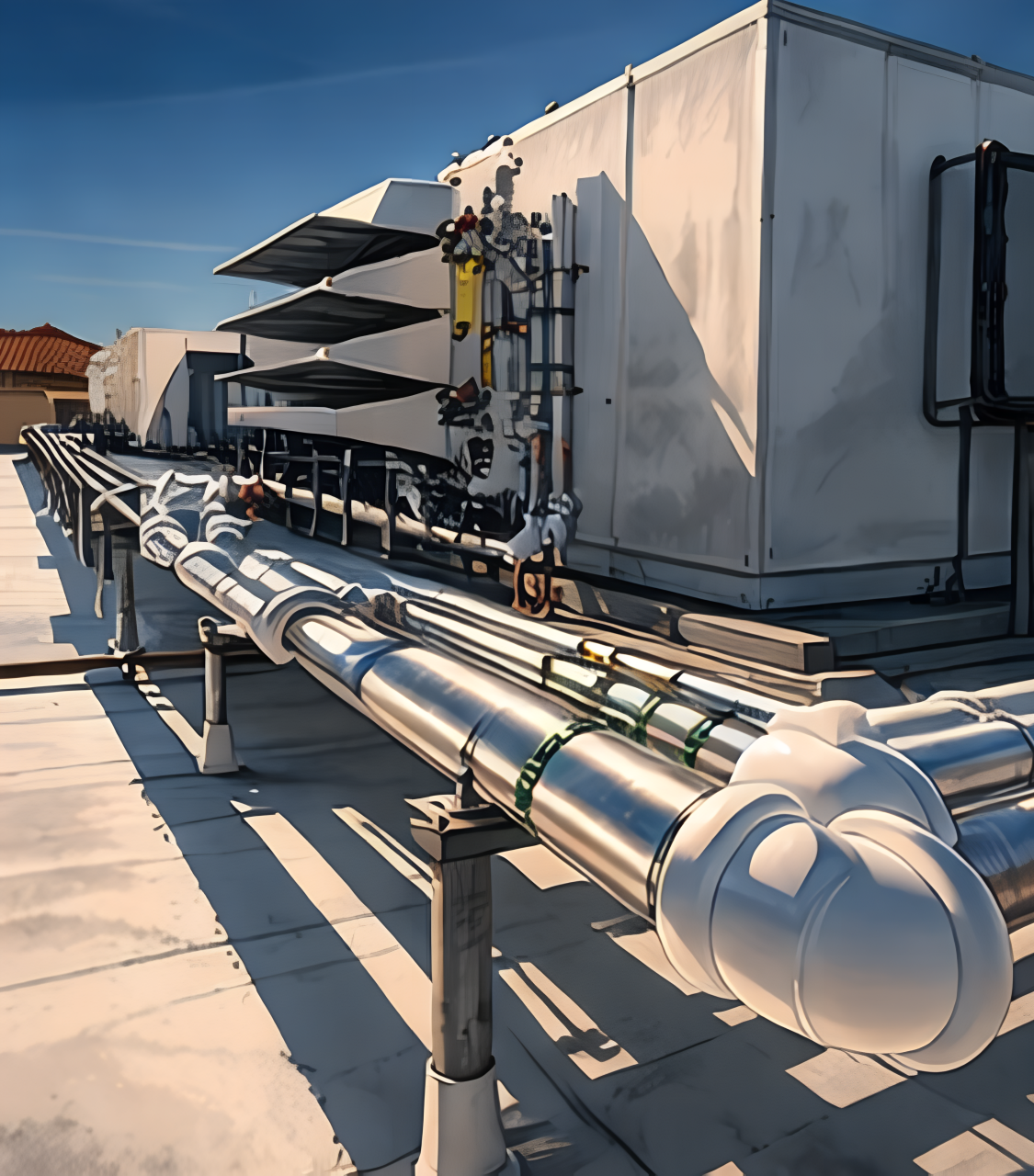
Any commercial or industrial setting with chemical exposure, including manufacturing facilities, water treatment plants, and laboratories, falls outside warranty protection. Coil failure rates in these environments are significantly higher than standard applications.
For normal residential installations, warranty will likely cover the replacement part. But you still face $850 to $2,400 in labor and refrigerant costs plus one to three weeks without AC during peak season.
For challenging environments including coastal, pool, agricultural, and industrial, many manufacturers exclude coverage. Check your warranty.
For everyone: there is no warranty claim fast enough to get your AC back on before the weekend. CoilShield prevents the failure in the first place. That is the point.
We do not replace or extend manufacturer warranty. We focus on prevention: proven cathodic protection so you avoid the cost and disruption of premature coil replacement.
Not sure where your environment falls on the risk scale? Contact us with your location and application and we will help you assess your exposure level.
CoilShield protects the electrochemical side of coil failure. Good HVAC habits reduce the mechanical and environmental stress that pushes coils toward trouble faster. If you want your system to last, these are the simple habits worth keeping.
Most avoidable HVAC strain starts with restricted airflow. A coil that cannot move enough air runs colder, stays wet longer, and is more likely to accumulate dirt and biological growth. More wet time means more time for corrosion to stay active.
A loaded filter reduces airflow across the evaporator coil, which can drive lower coil temperatures and longer wet cycles. In most homes, that means checking the filter monthly and replacing it on the schedule your system and dust load actually require, not waiting until airflow is visibly poor.
Closed supply registers, blocked returns, and furniture shoved against grilles all force the system to work harder. The coil still gets cold, but the air carrying moisture and heat away from it is reduced. That is how an ordinary comfort issue becomes a coil stress issue.
Your evaporator coil is designed to get wet. Your drain system is designed to get that water out of the unit quickly. When the drain path slows down, moisture lingers where it should not.
A partially blocked condensate line does not always cause an immediate overflow. It often causes slow drainage first. That leaves more standing water in the pan and more humidity inside the air handler cabinet. Make drain-line flushing part of routine service, especially in humid climates.
Rust staining around the drain pan area, musty odor near the air handler, or insulation that stays damp long after the system cycles off all point to drainage problems worth fixing early.
Many homeowners and even some technicians do more damage with the wrong cleaner than with the dirt they were trying to remove. Modern coils, especially aluminum-heavy designs, have a narrow safe chemistry window.
Coil surfaces are not the place for aggressive improvisation. Use products approved for your coil type, follow dilution instructions, and rinse exactly as directed. One wrong cleaner can shorten coil life significantly.
The goal is removing debris while preserving metal surfaces, coatings, and fin geometry. A coil does not need to look polished. It needs to stay clean enough to move heat and moisture without damage.
Your HVAC system processes whatever your building air contains. That includes dust, VOCs, cleaning vapors, and pool chemicals if they are present.
If you are painting, using adhesives, deep-cleaning, or renovating, ventilate aggressively. Concentrated VOC exposure during these periods is exactly what pushes some systems toward formicary corrosion trouble.
Do not store bleach, acids, fertilizers, pool chemicals, or strong solvents near indoor air handlers or return-air paths. Even sealed containers can vent enough vapor to matter over time in a confined space.
Coil failures rarely feel sudden in hindsight. Usually there were clues: longer runtimes, weaker dehumidification, ice formation, unexplained condensate issues, or service calls that keep circling back to the same symptoms.
If your home takes noticeably longer to pull down temperature or humidity than it did last season, do not assume it is just weather. Reduced airflow, fouling, refrigerant issues, or early coil trouble may be part of the picture.
A system should not need refrigerant repeatedly. If you hear the same recommendation more than once, treat it as a leak investigation, not a maintenance footnote.
Good maintenance habits reduce stress. CoilShield addresses the electrochemical mechanism that still exists even when the system is otherwise well cared for. Together, they give your coil the best chance to outlast the equipment around it.
Want help deciding which maintenance issues are ordinary upkeep and which ones point to a real corrosion risk? Contact us and we will help you sort through it.
Prevention, not repair
CoilShield brings proven cathodic protection to residential, coastal, agricultural, and commercial systems. Tell us about your environment and we will point you to the right protection strategy.